
Thinking about the future means thinking about your health. If you don’t think about your health, your future may be Hobbesian: “poor, nasty, brutish, and short…”
Scientists tend to be future-oriented, even those such as paleontologists and archaeologists who study the past. They study the past to understand how the present was formed and to predict what the future might be. Failing to think about the future can have disastrous consequences, as the Maori of New Zealand discovered.
The Maori arrived in New Zealand around 800 - 1000 years ago to discover a land of wondrous and seemingly unending bounty. After a months-long voyage at sea, it must have seemed that they landed in paradise. Numerous species of flightless birds, the moa, some taller than 10 feet, lived in large colonies throughout the islands. The shores were home to large populations of seals. Having never encountered humans before, these animals had no fear and were thus easy prey.
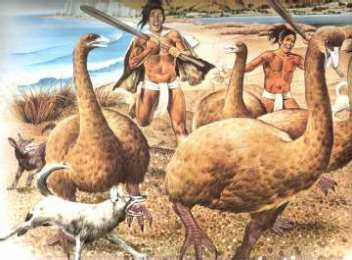 The Maori probably brought with them the usual Polynesian domesticates such as pigs and chickens, but given such natural bounty, it appears no effort was made to retain them since there is no archaeological evidence of pigs and chickens in New Zealand prior to European settlement. Unfortunately, another animal that arrived with the Maori did make its presence felt: the rat. Within a few hundred years, the combined depredations of the Maori and the rat drove the moa, the seals, and most other large-to-medium-to-small-sized animals to extinction, or to bare survival in rat-and-human-free refugias. There was one other animal that arrived with the Maori, the dog. After the collapse of the ecosystem, dog and rat became the Maori’s primary dietary meat sources. The Maori also subsisted on tubers that were considered delicacies in New Zealand, but were starvation foods elsewhere. They were able to fish and collect shellfish, but life in New Zealand became nasty, brutish, and short. Paradise was lost.
There are those who believe that we should live only for today because we do not know what tomorrow brings. In the midst of bounty, planning and/or saving for the future probably seems foolish. I imagine it seemed that way to the original Maori. Who thinks about your children’s grandchildren and the life they will have? There is plenty now. Won’t there always be plenty in the future?
Most humans have difficulty thinking about and planning for the future. This is probably what makes the discussion of global climate change so fractious. The future-oriented scientists clearly see the problem and have plans of action to help ameliorate it. But those individuals who are not future-oriented see only that life is much the same as it was a few years ago, and so believe that there is no great need for concern. Let tomorrow take care of itself.
This same lack of concern for tomorrow also means that the non-future-oriented are more likely to put their health at risk. They say, “I feel fine today. What I am doing [sitting on the couch] and what I am eating [junk food] must be OK because I am able to do my job, pay my bills, and have fun. Life is good. I don’t need to change my life. Besides, change is difficult, and no fun.” Perhaps. But then type 2 diabetes and heart disease aren’t fun either. “Who cares? I don’t have those problems now. No one lives forever anyway.”
Those who live only in the present have a fatalistic outlook: the future is set and nothing can be done to change it. In contrast, the future-oriented individual believes that the future is full of possibilities and opportunities over which he or she has some control. Decisions made today will have repercussions for good or bad in the future.
It may be that whether or not one is future-oriented is an inborn personality trait. If so, it will indeed be difficult for those without this trait to plan and make the changes in their lives that will lead to a healthy life many years down the road. In that case, they may need to view the future as next month, or next week, or even tomorrow in order to begin to change.
 You need to take care of yourself now so that you will be able to make the most of the opportunities the future brings. Start the New Year and the New Decade out right by deciding to make the changes that will result in this being your best year and best decade yet.
See you in a bright, wonderful future!


