Showing posts with label well-being. Show all posts

Sunday, June 3, 2012

Obesity and Vitamin D

It has been awhile since I talked about vitamin D on this blog, so here are some new insights. Research published in May in the American Journal of Clinical Nutrition found that mother's who are vitamin D-deprived during pregnancy are more likely to have children who suffer from obesity. Of the 977 women in the study, the average serum level of 25 OHD (vitamin D) was 24.8 ng/ml which is about 50% of the optimal level of 50 ng/ml.  However, the vitamin D status of these women was actually worse than this since 35% of the women had serum 25 OHD levels below 20 ng/ml and were, therefore, clinically deficient in vitamin D. These women gave birth to infants who were low in both lean and fat body mass, but who, by age six, had higher levels of body fat than did the children whose mothers were vitamin D-sufficient during pregnancy.  The researchers checked for confounding factors, but found that maternal BMI and weight gain during pregnancy did not play a role.  They concluded that, "Lower maternal vitamin D status may be linked to programmed differences in offspring fat mass. The findings require replication but add to a growing evidence base for a role of vitamin D in the origins of adiposity."  That is, pregnant women who have inadequate levels of vitamin D may pre-dispose their children to obesity later in life.  It does not appear that the researchers checked the vitamin D levels of the children.  But if the mothers were deficient during pregnancy, the children would have been born vitamin D deficient.  And it is probable that their vitamin D status was not optimized during childhood, especially if the mothers followed the dermatological guidelines which prevent children from receiving UVB radiation exposure and thereby prevent them from making vitamin D by exposing their skin to sunlight.  [See my post on Dermatological Purdah for more on this issue.]


This research provides further support for an earlier study (2009) on weight loss at the University of Minnesota that found that obese individuals were vitamin D deficient. Dr. Sibley was running a diet study with 38 participants.  She found that those who were vitamin D-deficient had a much harder time losing body fat than did those with higher levels of vitamin D.  While she admits that her observational study does not provide clear evidence for a cause/effect relationship between obesity and vitamin D levels, it is suggestive.  The hormonal form of vitamin D affects the "...same pathway (the renin-angiotensin system) [that] also affects fat cell development and metabolism...What’s interesting about our study is we did not recruit people to be vitamin D inadequate; we recruited people who were overweight or obese for our weight-loss study. And they happened, on average, to have inadequate vitamin D levels, so it tells you how prevalent the problem is.”  


While more research needs to be done on this connection, vitamin D deprivation is a widespread problem in the United States, as is obesity.  If raising serum 25 OHD levels can increase weight loss and prevent childhood obesity, then this problem seems to have a relatively easy fix.  If you've taken the dermatologist's warnings seriously, but you still want to raise your vitamin D levels, then you will need to take supplements.  Make sure the supplements are vitamin D3, without calcium. Excess calcium intake via supplementation is a bigger problem than no calcium supplementation. To raise your levels to 50 ng/ml, you will probably need to take 2000 - 4000 IU/day.  It is a good idea to have your vitamin D levels checked before beginning supplementation, and then again after three months of supplementation.  Pregnant women need to take at least 5000 IU/day of vitamin D3.


If diet and exercise are not really doing the job in helping you to lose weight, try optimizing your vitamin D levels.  It may be just the kickstart you need to get you on the road to better health.


Wednesday, December 9, 2009

'Tis the Season


It’s that time of year when we start thinking about the health and well-being of ourselves and those we love. As one year ends and another begins, we think about what we’ve accomplished, what we still want to do, and what we need to change.

To help you achieve your goals, you may wish to purchase a PDF copy of my book Walking in Sunshine: LifeStyle Changes to Make for a Bright Healthy Future at this link:
http://www.anthrohealth.net/ahbook.htm

Learn how your individual biology, behavior, and the environment in which you live interact to affect your health and well being. Discover why: adaptations matter, walking is the best exercise, sunshine is necessary, proper diet = better health, natural parenting is effective parenting, and much more.

Walking in Sunshine includes the Flexibilities appendix: color photos and directions detailing each movement in the sequence of stretches that scientific research has shown will help you prevent heart attacks, strokes, and osteoarthritis. Feel and act younger, move more gracefully, lose the achiness. Get flexible and live longer. Flexibilities can also be purchased as a separate PDF copy at this link:
http://www.anthrohealth.net/ahflexbooklet.htm

Walking in Sunshine: LifeStyle Changes to Make for a Bright Healthy Future will help you and your loved ones improve your lives. In addition, a PDF copy is environmentally green. Better your lives while helping the environment.

‘Tis the Season! May you have a wonderful life full of health and well-being.

Tuesday, August 18, 2009

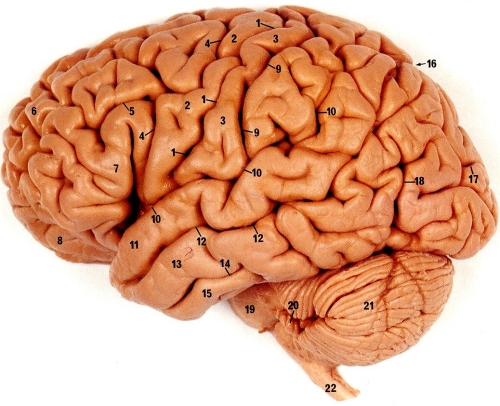
Brain Power

US News and World Report just published an article on “America’s 10 Brainiest States.” Degree of braininess was based on population surveys concerning the following indicators of brain health:


· Eat a Healthy Diet:
o Low saturated fat and cholesterol
o Five or more daily servings of fruits and vegetables
o Daily intake of omega-3 fatty acids, especially from eating fatty fish
o Breast feed infants

· Exercise at least 30 minutes each day.
· Watch your weight.
· Do not smoke.
· Sleep around 7 - 8 hours each night.
· Mental Stimulation:
o Read every day.
o Play mentally challenging games.
o Learn new things.
· Get involved:
o Volunteer
o Join clubs
o Stay in touch with family and friends

State rankings were based on the analysis of these factors. You can read more about the methodology of the study here: http://www.lifesdha.com/brainindex/About--i-lifesDHA--i--Index-of-Brain-Health.aspx (Washington, DC was included as a state for the purposes of this research.)

According to the researchers, the top 10 brainiest states/polities are: District of Columbia, Maryland, Washington (state), Vermont, Connecticut, Colorado, Massachusetts, New Jersey, Maine, and New Hampshire. The 10 lowest-ranking states are: North Dakota, South Carolina, Indiana, Arkansas, Kentucky, Tennessee, Mississippi, Oklahoma, Alabama, and Louisiana.

I found this distribution rather intriguing and wanted to explore it further, so I compared this ranking of state brainpower with the map of the Electoral College distribution from the 2008 Presidential Election.

All of the top 10 brainiest states are Blue States. All of the lowest ranking states, except for Indiana, are Red States. Further examination showed that of the top 25 brainiest states, only 7 (Georgia, Idaho, Montana, Utah, Arizona, Wyoming, and Alaska) are Red States. The other 18 are Blue States. And of those 7 Red States, all are in the West except for Georgia.

Now, as we know, Correlation does not equal Causation. But it is an intriguing distribution worthy of further thought.

A correlation that, in this case, does equal causation is that the indicators of brain health listed above match with the AnthroHealth Way to Health and Well-Being about which I’ve been writing since 2002. http://www.anthrohealth.net/aharchives.htm
So keep eating those sardines!

The Brain Health research website also includes a brief on-line survey you can take to see if you are living a brain healthy lifestyle: http://www.lifesdha.com/50-States/View-All-Rankings/tabid/330/Default.aspx

I want to hear what you think about the Blue State/Brainy State correlation, so please add comments to this blog.