Saturday, January 2, 2010

Focus on the Future


Welcome to a New Year and a New Decade! New beginnings mean we should think about the future. What are your goals, plans, desires, wishes, wants, needs? This is not the time to focus on what might have been. Nor is it the time to live only in today. The past provides guidance for the present, which allows us to plan for the future.

Thinking about the future means thinking about your health. If you don’t think about your health, your future may be Hobbesian: “poor, nasty, brutish, and short…”

Scientists tend to be future-oriented, even those such as paleontologists and archaeologists who study the past. They study the past to understand how the present was formed and to predict what the future might be. Failing to think about the future can have disastrous consequences, as the Maori of New Zealand discovered.

The Maori arrived in New Zealand around 800 - 1000 years ago to discover a land of wondrous and seemingly unending bounty. After a months-long voyage at sea, it must have seemed that they landed in paradise. Numerous species of flightless birds, the moa, some taller than 10 feet, lived in large colonies throughout the islands. The shores were home to large populations of seals. Having never encountered humans before, these animals had no fear and were thus easy prey.
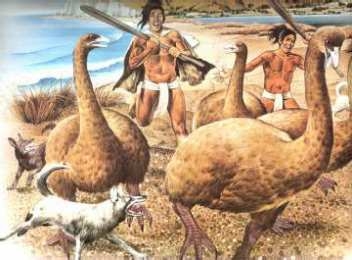

The Maori probably brought with them the usual Polynesian domesticates such as pigs and chickens, but given such natural bounty, it appears no effort was made to retain them since there is no archaeological evidence of pigs and chickens in New Zealand prior to European settlement. Unfortunately, another animal that arrived with the Maori did make its presence felt: the rat. Within a few hundred years, the combined depredations of the Maori and the rat drove the moa, the seals, and most other large-to-medium-to-small-sized animals to extinction, or to bare survival in rat-and-human-free refugias. There was one other animal that arrived with the Maori, the dog. After the collapse of the ecosystem, dog and rat became the Maori’s primary dietary meat sources. The Maori also subsisted on tubers that were considered delicacies in New Zealand, but were starvation foods elsewhere. They were able to fish and collect shellfish, but life in New Zealand became nasty, brutish, and short. Paradise was lost.

There are those who believe that we should live only for today because we do not know what tomorrow brings. In the midst of bounty, planning and/or saving for the future probably seems foolish. I imagine it seemed that way to the original Maori. Who thinks about your children’s grandchildren and the life they will have? There is plenty now. Won’t there always be plenty in the future?

Most humans have difficulty thinking about and planning for the future. This is probably what makes the discussion of global climate change so fractious. The future-oriented scientists clearly see the problem and have plans of action to help ameliorate it. But those individuals who are not future-oriented see only that life is much the same as it was a few years ago, and so believe that there is no great need for concern. Let tomorrow take care of itself.

This same lack of concern for tomorrow also means that the non-future-oriented are more likely to put their health at risk. They say, “I feel fine today. What I am doing [sitting on the couch] and what I am eating [junk food] must be OK because I am able to do my job, pay my bills, and have fun. Life is good. I don’t need to change my life. Besides, change is difficult, and no fun.” Perhaps. But then type 2 diabetes and heart disease aren’t fun either. “Who cares? I don’t have those problems now. No one lives forever anyway.”

Those who live only in the present have a fatalistic outlook: the future is set and nothing can be done to change it. In contrast, the future-oriented individual believes that the future is full of possibilities and opportunities over which he or she has some control. Decisions made today will have repercussions for good or bad in the future.

It may be that whether or not one is future-oriented is an inborn personality trait. If so, it will indeed be difficult for those without this trait to plan and make the changes in their lives that will lead to a healthy life many years down the road. In that case, they may need to view the future as next month, or next week, or even tomorrow in order to begin to change.

You need to take care of yourself now so that you will be able to make the most of the opportunities the future brings. Start the New Year and the New Decade out right by deciding to make the changes that will result in this being your best year and best decade yet.

See you in a bright, wonderful future!

Wednesday, December 9, 2009

'Tis the Season


It’s that time of year when we start thinking about the health and well-being of ourselves and those we love. As one year ends and another begins, we think about what we’ve accomplished, what we still want to do, and what we need to change.

To help you achieve your goals, you may wish to purchase a PDF copy of my book Walking in Sunshine: LifeStyle Changes to Make for a Bright Healthy Future at this link:
http://www.anthrohealth.net/ahbook.htm

Learn how your individual biology, behavior, and the environment in which you live interact to affect your health and well being. Discover why: adaptations matter, walking is the best exercise, sunshine is necessary, proper diet = better health, natural parenting is effective parenting, and much more.

Walking in Sunshine includes the Flexibilities appendix: color photos and directions detailing each movement in the sequence of stretches that scientific research has shown will help you prevent heart attacks, strokes, and osteoarthritis. Feel and act younger, move more gracefully, lose the achiness. Get flexible and live longer. Flexibilities can also be purchased as a separate PDF copy at this link:
http://www.anthrohealth.net/ahflexbooklet.htm

Walking in Sunshine: LifeStyle Changes to Make for a Bright Healthy Future will help you and your loved ones improve your lives. In addition, a PDF copy is environmentally green. Better your lives while helping the environment.

‘Tis the Season! May you have a wonderful life full of health and well-being.

Wednesday, November 25, 2009

Gut Check

Over the past few weeks there has been a lot of media coverage on the new guidelines for mammograms and breast self exams. Analysis of scientific research indicates that mammograms can do more harm than good. This is not what anti-breast cancer crusaders like the Susan G. Komen Foundation want to hear. Women are worried and confused because they have been told that they must have mammograms to detect and prevent breast cancer. Now the scientists are saying that is not the case and that, in fact, they can be counter-productive.

For every women correctly diagnosed with cancer after a mammogram there are significantly more women who endure the trauma of a false positive reading. They have no disease but undergo what turn out to be needless breast biopsies where they run the risk of a lung puncture from a poorly-performed needle biopsy. Unless a woman has a family/genetic history of breast cancer, the odds of her getting it prior to age 70 are actually quite low.

No one wants to be the one to tell the average 40-year-old woman without a family history of breast cancer to stop getting mammograms and then find out 3 years later that she developed breast cancer. But, again, the odds of her developing it are low. The cancer foundations and some health professionals appear to be operating under the “better safe than sorry” mantra while ignoring the fact that false positives can also lead to a sorry situation.

In 2002, Gerd Gigerenzer, author of Calculated Risks: How to Know When Numbers Deceive You, pointed out that the general public and many medical professionals do not really understand statistics. This lack of understanding leads them to judge inaccurately the actual risks and benefits of health screenings.

According to Gigerenzer, the vast majority of physicians who participated in the research described in his book cannot accurately determine risks and benefits when these are presented in the form of probabilities. (e.g. There is a 25% risk reduction in death from breast cancer with mammography.) Only when the results are presented in the form of natural frequencies do the risks and benefits become clear. (e.g. 1000 women got mammograms each year for 10 years and 1000 women did not. At the end of 10 years, 3 women in the first group and 4 women in the second group died of breast cancer.) If we and our physicians cannot accurately determine risks and benefits when they are presented as probabilities, we could be unnecessarily risking our health. How many of the 997 women who got mammograms each year for 10 years also had false positives during that time? How many experienced the trauma, pain, and potential negative outcomes of the additional testing required to rectify that false positive?

Rather than relying on mammograms (and other types of screenings) to safeguard their health, it would be better for women in their 40s and 50s to actively employ measures that we know can help prevent cancer. These measures include eating plenty of richly-colored fruits and vegetables; eliminating dairy and other saturated fats; getting plenty of exercise; sleeping around 8 hours each night; and taking a minimum supplement of 1000 IU/day of vitamin D3. More vitamin D supplementation may be required to get the blood levels of 25 OHD to the optimal level of 50 ng/mL.

By following these preventive measures all women, even those with a family history of breast cancer, will reduce their odds of developing the disease. And those without a family history will be able to ignore their guts and go with their brains in accepting the scientific data which states that we in the United States have been over-using mammograms. Look at the natural frequency data. Mammograms haven’t been as much help as we thought. Eat right, exercise, sleep well, and take vitamin D. That’s where the science is.

Wednesday, November 18, 2009

Eat for Health: A Review


Dr. Joel Fuhrman (Eat for Health) is one of the major proponents of a predominantly vegetarian diet he calls nutritarian. At first blush, his diet is very similar to that which I have long promoted: eat lots of fruits, vegetables, and tree nuts while eliminating dairy and grain-based foods. Dr. Fuhrman also allows very limited amounts of eggs, fish/shellfish, and poultry, but would essentially eliminate red meat. It is at the level of protein intake that Dr. Fuhrman and Dr. Fuller differ. Dr. Fuhrman wants proteins to be essentially vegetable-based, while Dr. Fuller knows that humans also need animal-based proteins.

Both of us recognize that humans are primates and that chimpanzees are our closest living relatives. Therefore, we both look to the chimpanzee diet for guidelines as to what our ancient ancestors ate. However, Dr. Fuhrman seems to conflate the diet of the gorilla with that of the chimpanzee. He also ignores a major difference we have with our fellow apes and the implication that has for human diets: our much larger brains.

Gorillas eat a lot of leafy vegetation; they are vegetarians. Chimps eat very little leafy vegetation. The major components of the chimp diet are fruits and nuts, but they also eat as much animal-based protein as they can find: ants, termites, eggs, monkeys, bush pigs, etc. Dr. Fuhrman combines the gorilla’s leafy diet with the chimp’s fruits and nuts and concludes that this is the proper diet for humans. In the wild, generally the only time chimps eat leaves is when they eat meat (except for certain unpalatable leaves eaten to remove intestinal parasites). Chimps and humans do not have the same ability that gorillas have to process large quantities of leafy vegetation through their guts.

Archaeological evidence shows that hominin (humans and their ancient ancestors) brains did not begin to enlarge until animal-based protein (primarily fish/shellfish and water fowl eggs) became a larger component of the diet. These foods are excellent sources of omega-3 fatty acids, necessary for proper brain growth, development, and function. Some plant-based foods such as tree nuts and flax seeds do provide omega-3 fatty acids, but research shows that these are not a good source: humans (and other mammals) cannot efficiently convert the plant-based fatty acids into the forms required for use in the brain. With the development of agriculture and an increasing reliance on plants in human diets, the size of human brains has actually decreased over the past 10,000 years.

In chapter 13 of Eat for Health, Dr. Fuhrman has an entire section inveighing against eating fish and shellfish because of mercury contamination. Mercury is a problem in large, long-lived fish. However, it is not a problem in shrimp and sardines, and other small, short-lived varieties. Is it worth relegating fish and shellfish to a very minor part of your diet if it also means that you are not providing your brain with enough omega-3 fatty acids?

Overall, Dr. Fuhrman’s book is full of good advice for those who are overweight and have chronic health problems. However, his nutritarian program is too close to that of a vegetarian/vegan if you want to have an optimally functioning brain. A few modifications will bring Dr. Fuhrman’s plan into line with Dr. Fuller’s Premier Nutrition Plan [http://www.anthrohealth.net/AHNews%20V6N7.htm]: a plan that keeps you healthy and brainy.

Saturday, October 31, 2009

Flexibility for Life


When I was 32 I realized that I was not as flexible as I had once been. This disturbed me because at that time my grandmother was having increasing difficulty moving. Her shoulders were becoming stiff and inflexible. She needed a knee replacement. My grandmother was only 75. I loved her dearly, but I didn’t want to have the same problems with my body. From that point, I put together a series of joint movements I call Flexibilities; and I began doing them every morning when I first arose.

Over the next several weeks, I noticed that not only was I becoming more flexible, but I felt less achy and stiff when I awoke each morning. Doing the movements in the morning meant that I felt loose, alert, and ready for the day ahead. I walked a little taller with a bounce in my step.

Through the intervening years, I’ve continued to do the flexibilities each morning. On those days that for some reason I do not do the movements, I feel a little off. I’ve also found that if I do not do the flexibilities first thing in the morning, I am less likely to do them at all that day.

In addition to doing the joint movements, I do two other things to aid joint health. Each day with my breakfast (blueberries and bananas, tomato salsa omelet, and grapefruit juice) I take a vitamin D3 supplement. Vitamin D3 is vital for skeletal and muscle strength (and many other aspects of health). For lunch I eat water-packed sardines. Sardines are a super food: they are a great source of protein, calcium, vitamin D3, and omega-3 fatty acids. Omega-3 fatty acids help reduce joint inflammation (along with many other benefits).

Following this program for over two decades, I have great flexibility, no signs of osteoarthritis, and good overall health. Two research studies provide support for my anecdotal experience.

The first, published about one year ago by UC San Diego researchers, found that flexing joints prompts chondrocytes (cartilage cells) to produce a lubricating substance that keeps the joint surfaces smooth. The more the joint was flexed, the greater the percentage of chondrocytes that produced lubrication, keeping the glassy surface of the joint smooth. Joints that are not flexed produce very little lubrication resulting in an erosion of the smooth cartilage and, eventually, the pain of osteoarthritis.

The second study was published earlier this month in the American Journal of Physiology. These researchers in Texas and Japan found that an individual’s degree of flexibility could be positively correlated with that individual’s degree of arterial flexibility. That is, the most flexible adults had the best arterial condition and the lowest risk for having a heart attack or stroke. Those adults with the greatest joint stiffness were at highest risk of suffering from a heart attack or stroke.

Do you want to live a longer, healthier life? Then you need to add daily flexibilities to your routine. If you would like a PDF copy (for $3.00) of my Flexibilities booklet which includes photos and directions for each movement, click here. http://www.anthrohealth.net/ahflexbooklet.htm


Friday, October 23, 2009

Genes are not Paint Pots: Part 2 Polygenic Traits

Articles on genetics make it seem that every trait is a single gene trait. Single gene traits are easier to understand and seem easier to manipulate. I imagine that most geneticists would be thrilled if all our traits were caused by single genes. Unfortunately for them, that is not the case. In fact, for most traits of interest multiple genes are involved. They are polygenic traits: the result of the interaction of multiple forms of multiple genes with the environment in which that individual and/or his/her ancestors live/lived. The proportion of genes to environment varies with each trait. In most cases, we really have no idea of the true proportion. Regardless, it is important to remember that these traits are not simple and, therefore, we are a long ways from being able to fully understand and manipulate them.

Polygenic traits exhibit continuous variation: there are no distinct boundaries between one form of the trait and another. Unlike the blood type example from the Part 1 blog [below] where one is either Type A or Type O, polygenic traits can seem like blends. Some examples of polygenic traits include: height, weight, intelligence, hair color, and eye color. Adults are not 5’, 5.5’, or 6’ tall with no heights between. Height is continuously distributed. Although we say a woman is blond or brunette, we know that the range of variation within each category is large. Another example of a polygenic trait is skin color.


Geneticists have spent years trying to figure out the genetics of human skin color. They’ve found genes that affect skin color, but they have not yet been able to fully explain the genetics that produce the variation we see. Nor can they confidently predict what color the offspring will be of parents with markedly different skin colors. If genes were paint pots, this should be easy to do. Take one very dark parent and one very light parent, and the offspring should be halfway between. Sometimes this looks to be the case, but the children can range in skin color from light to dark. There is no way to tell ahead of time. I know a couple where the wife has very dark skin color and black hair, while the husband has very light skin color and blond hair. One child has medium brown skin color and wavy brown hair while the other child has very light skin color and tightly curled blond hair.

Some geneticists have talked about parents choosing their baby’s traits. If traits were of the single gene variety this might barely be possible. But with polygenic traits, it is not going to happen. At least, not in the foreseeable future. If you look a great deal like your mate, your child may look a great deal like you. But it isn’t guaranteed. [See the Part 1 blog below.] If you and your mate are quite dissimilar in looks, each birth will be an unexpected mix of traits. Your child will not be a blend. Genes are not paint pots. And that is a great thing because we do not know what the future will bring. The more variation there is in your offspring, the better the chance that they will do well in that unknown future.

Thursday, October 1, 2009

Genes are not Paint Pots: Part 1 Genetics and Genealogy

Even though everyone graduating from high school is supposed to have taken biology, there is still much that remains misunderstood among the general public about many topics in biology, including genetics. Mendel would be so disappointed.

Prior to Mendel’s research with pea plants in the mid-1800s, it was assumed by everyone that offspring were a blend of their parents’ traits. Mendel found that this assumption was false. Purebred tall pea plants crossed with purebred short pea plants did not produce medium-sized offspring. They produced tall offspring. Traits did not blend. The world changed! NOT! No one even paid any attention for about 50 years. And then, it was only a few scientists (who became geneticists) who really noticed.


To understand this better, let’s start with a simple Mendelian (single gene trait) example: ABO blood type. You get half of your chromosomes (23) from your mom and half (23) from your dad. Both sets of chromosomes have the same genes, BUT they may have different forms of those genes. In our example, your chromosome #9 from your mom contains the ABO blood type form O. The one from your dad is A. Your blood type is not a blend of O and A. It is A (because A is dominant over O). But your genotype is AO.

Now, it is years later and you are ready to have a child. Your mate is blood type O. That means your mate has a genotype of OO. Due to the randomness of meiosis (cell division that produces gametes: eggs or sperm), your gamete contains the O form from your mom. Your mate also provides an O, so your child will have blood type O and genotype OO. Not only is your dad’s gene for ABO not passed on to his grandchild child, neither are any of the nearby genes on that chromosome. And if your dad’s chromosome #9 did not undergo recombination during meiosis (exchanging material with the other chromosome #9s), all your dad’s genes on that chromosome are absent from his grandchild child. It is possible, although improbable, that your child contains chromosomes and genes ONLY from your mother. It is also possible, although improbable, that the only chromosome your child inherited from grandma is #9. There is no blending of the grandparents’ traits in the grandchild.

What this means is that in only two generations, traits can be lost from a family line. In our example, you know who your parents are, but it is possible that the traits of one of your parents will not be evident in your child, which is your parent’s grandchild. The big point? Genetics and Genealogy do not match.

Maybe you are really into genealogy and have a family tree dating back a couple of hundred years. You know who your ancestors are. But you decide it would be cool to have genetic testing done too. SHOCK!! According to the genetic testing, you do not have any Native American ancestry. But you know that your mom’s grandmother was Sioux. You have a picture of her! What gives?!
What gives is that since genes don’t blend, they can be lost to subsequent generations. Also, current genetic testing is only able to look at a subset of all your genes. Maybe your maternal grandma’s genes that you did inherit aren’t in that tested subset. Who knows?

Genetic information provides additional insights to your ancestry, but is not a substitute for genealogy. You need both types of information to fully understand your personal past.

Takeaway message: If you read an article, or see a show that states, “Based on genetic testing, there is no evidence that Population A is in the ancestry of Population B” remember that not all genes get passed down to all descendants, and that genetic testing only examines a subset of genes. Contrary to what that genetic test showed, it is quite possible that Population A is indeed in the ancestry of Population B. Genetics and Genealogy are different, complementary ways of knowing the past.